Cocobolo Wood: Properties, Uses, Price & Working Tips
Cocobolo wood is a dense tropical hardwood from Dalbergia retusa, a Central American tree in the rosewood genus Dalbergia. It is prized for its orange, red, brown, and nearly black figuring, along with exceptional hardness, natural luster, and durability. Those same traits also make cocobolo demanding to machine, glue, and finish.
It is commonly used for fine furniture, turned objects, decorative work, and musical instruments, but its high price, allergenic dust, and regulated trade are important considerations before choosing it for a project.
Where Does Cocobolo Wood Come From?
Cocobolo is native to the tropical Americas and is particularly associated with Central America. Understanding its botanical identity and range also helps explain why genuine, legally sourced material can be limited.
Cocobolo and Dalbergia retusa
The name cocobolo most commonly refers to the heartwood of Dalbergia retusa, a species in the Fabaceae family and the genus Dalbergia, which includes many of the woods commonly known as true rosewoods. Its native range extends from southeastern Mexico through Central America into Colombia, including Guatemala, Honduras, El Salvador, Nicaragua, Costa Rica, and Panama.
The commercially desirable portion is the dense, colorful heartwood rather than the lighter sapwood. Historical harvesting pressure and restricted supply contribute to its premium position.
Cocobolo Wood Properties
Cocobolo combines very high density and hardness with fine texture, strong natural color variation, and excellent biological durability. These properties explain both its appeal and its machining challenges.
| Property | Typical value or description |
| Scientific name | Dalbergia retusa |
| Native range | Southeastern Mexico through Central America to Colombia |
| Average dried weight | About 68.5 lb/ft³ (1,095 kg/m³) |
| Janka hardness | About 2,960 lbf (13,170 N) |
| Radial shrinkage | About 2.7% |
| Tangential shrinkage | About 4.3% |
| Grain | Straight to interlocked |
| Texture | Fine and even |
| Decay resistance | Very durable |
| Natural oils | High |
Color, Grain, and Texture
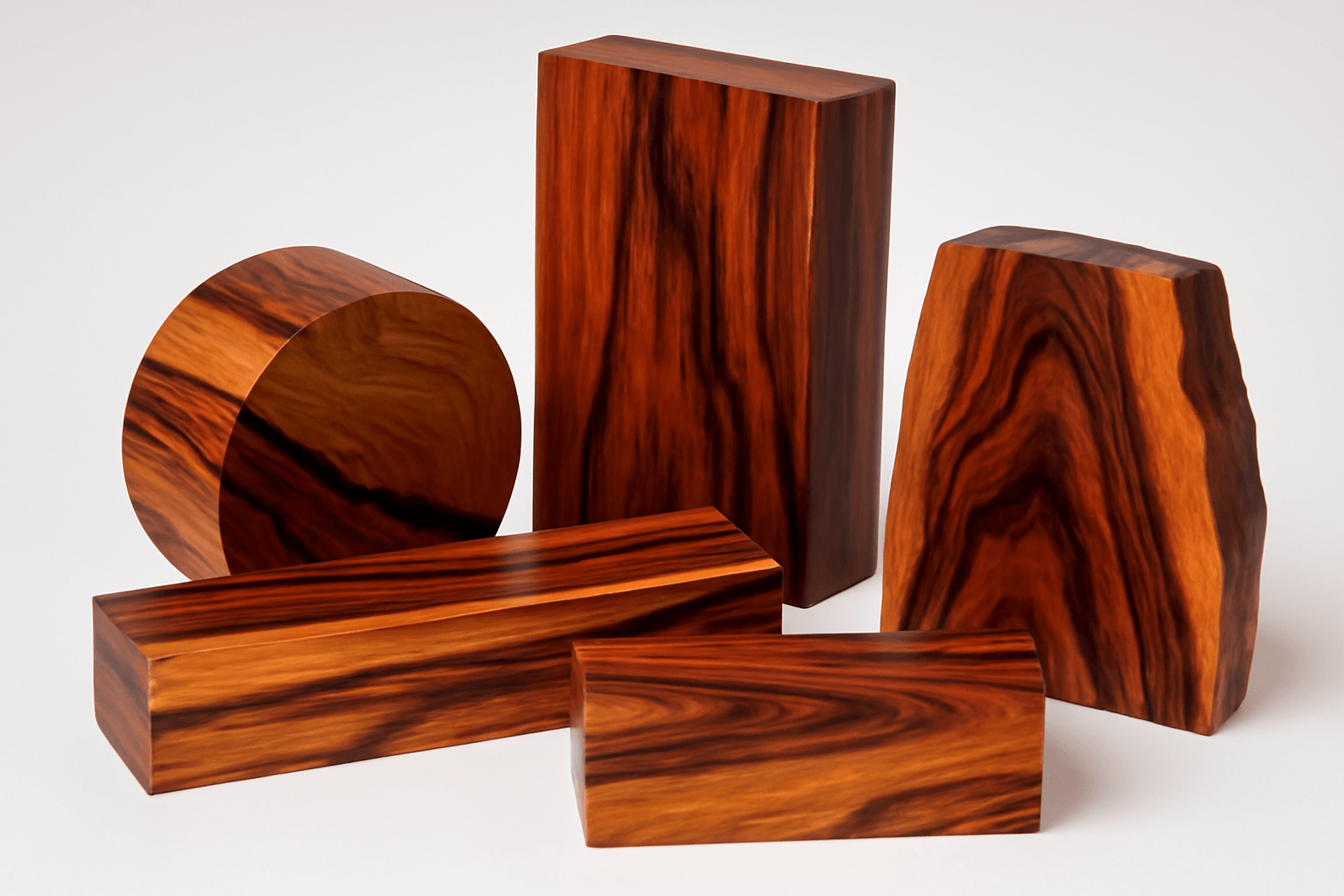
Freshly cut cocobolo can range from yellow and orange to vivid red or reddish brown, often crossed by irregular darker brown or black streaks. With age and exposure to light, brighter colors generally deepen and darken. Grain may be straight or interlocked, while the texture is typically fine and even, allowing well-prepared surfaces to develop a smooth, naturally lustrous appearance.
Density and Janka Hardness
With an average dried weight of about 68.5 lb/ft³ and a Janka hardness of approximately 2,960 lbf, cocobolo is an exceptionally dense and hard woodworking species. That figure indicates strong resistance to indentation, not abrasion. In the shop, its density and hardness increase cutting resistance and can dull tools quickly.
Durability and Dimensional Stability
Cocobolo is rated as very durable against decay. Technical references also document strong resistance to marine borers. Its low shrinkage contributes to good dimensional behavior once properly dried, although moisture control and grain orientation still matter.
Natural Oils, Odor, and Allergy Risks
One of cocobolo's defining characteristics is its high natural oil and extractive content. These compounds influence its luster, odor, adhesives, finishes, and workshop safety.
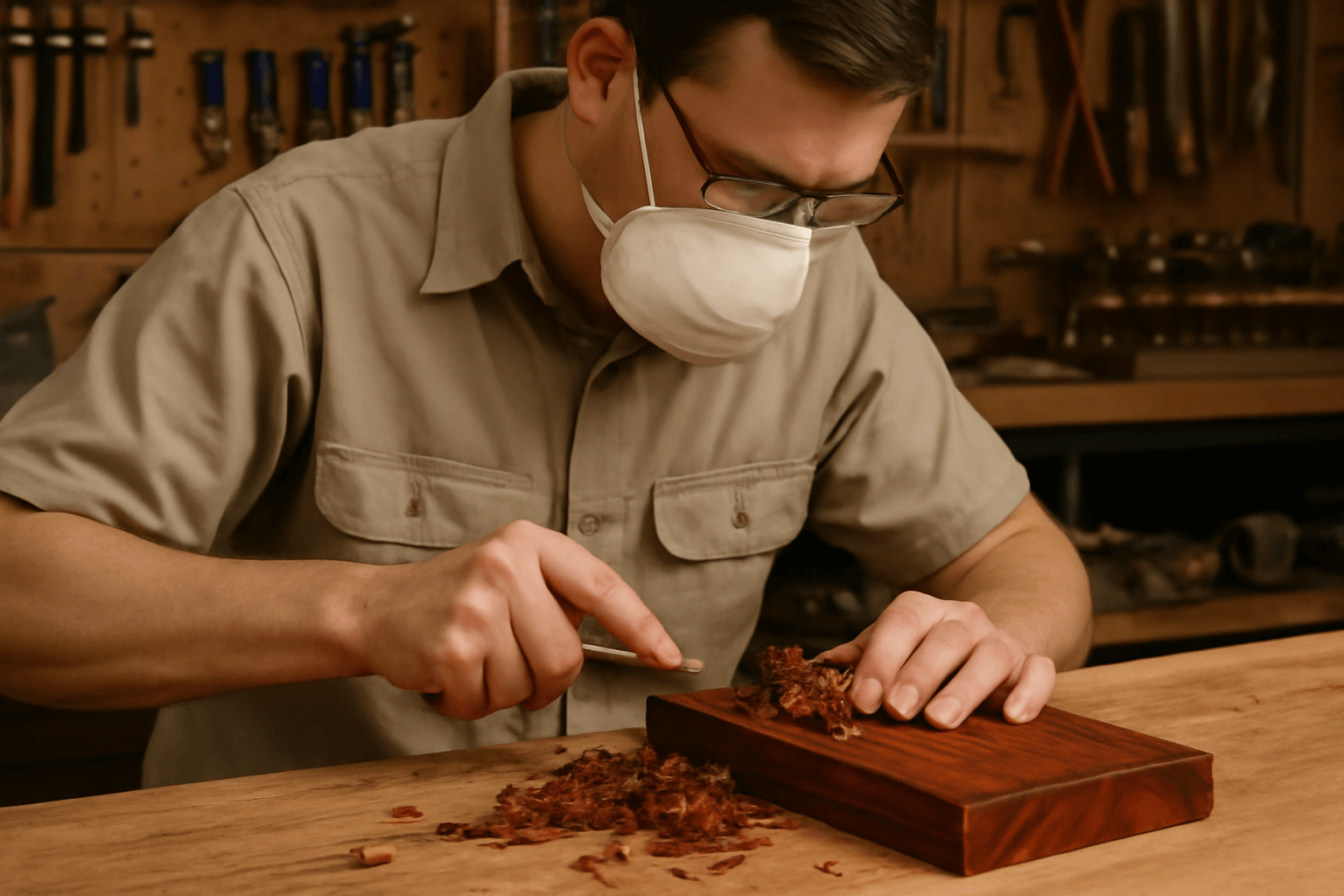
Freshly machined cocobolo can have a noticeable pungent, fragrant, or spicy scent. More importantly, the wood is a known sensitizer: its dust and direct contact can cause skin, eye, and respiratory irritation in susceptible people, and repeated exposure may increase sensitivity.
Safety note: Use effective dust collection, avoid skin contact with dust, and wear suitable respiratory and eye protection. Long-term occupational exposure to hardwood dust is associated with carcinogenic risk; this is a general wood-dust hazard, not evidence that cocobolo itself is uniquely carcinogenic.
What Is Cocobolo Wood Used For?
Because cocobolo is expensive, heavy, and visually distinctive, it is generally reserved for applications where appearance, fine detail, durability, or specialty performance justify the cost rather than for ordinary construction.
Furniture, Turnings, and Specialty Items
Cocobolo is used in fine furniture, cabinetry accents, boxes, handles, knife scales, pens, turned objects, decorative components, inlay, chess pieces, and other small high-value items. Large projects are less common because of cost, weight, and limited wide-board availability. Woodturners particularly value the species because its density and fine texture can produce crisp details and a smooth polished surface.
Cocobolo in Musical Instruments
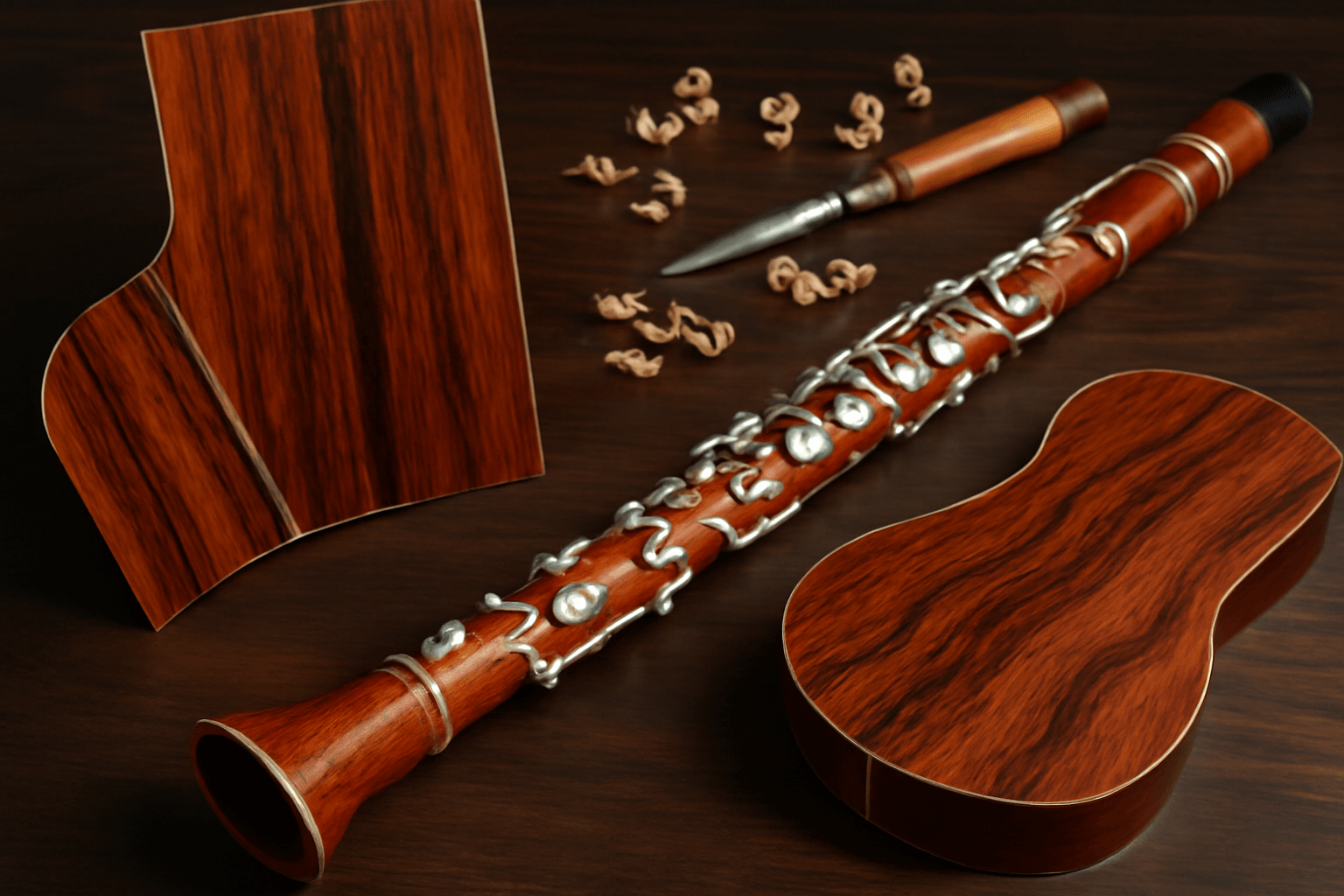
Instrument makers use cocobolo for selected woodwind components and for guitar parts such as backs, sides, fingerboards, bridges, and decorative details, depending on the builder and instrument design. Its density, stability, attractive figure, and documented instrument use make it desirable for high-end work, although weight and oiliness must be considered.
Working With Cocobolo Wood
Cocobolo can produce outstanding results, but it behaves differently from easier domestic hardwoods. High density, occasional interlocked grain, and oily surfaces make sharp tools, careful surface preparation, and controlled machining especially important.
Cutting, Planing, and Turning
Sharp carbide or well-honed cutting edges help reduce burning and rough surfaces. Interlocked grain can tear during planing, so light cuts and attention to grain direction are useful. Cocobolo turns particularly well and can hold fine detail, but its hardness can accelerate tool wear.
Gluing Cocobolo
Cocobolo is notoriously difficult to glue reliably because its oily surface can interfere with adhesive bonding. Freshly prepared, accurately fitted surfaces improve the chances of a sound joint, but cocobolo is not an easy-gluing wood. For critical joints, follow the adhesive manufacturer's guidance for oily tropical woods and test the bonding method on scrap before committing valuable stock.
Sanding and Finishing
Cocobolo sands to a very smooth surface and often develops substantial natural luster without a heavy film finish. Fine dust should be removed thoroughly between sanding and finishing. Because oils and pigments can interfere with coatings or bleed into nearby materials, test the finishing system on an offcut. Good extraction during sanding is especially important because this step can create large quantities of fine dust.
How Much Does Cocobolo Wood Cost?
Cocobolo is one of the more expensive commercially available exotic hardwoods in the United States. Prices vary substantially because boards, turning blanks, figured pieces, and instrument-grade stock are not directly comparable.
What Affects Cocobolo Prices?
Cost is driven by limited supply, trade controls, board dimensions, color and figure, grade, and demand from specialty woodworkers and instrument makers. Wider, longer, highly figured, or defect-free pieces generally command the greatest premiums.
As a practical U.S. retail benchmark in 2026, one specialty lumber dealer lists 4/4 cocobolo shorts at about $82 per board foot for purchases under 10 board feet, with lower per-board-foot pricing at larger quantities. Individual turning blanks and unusually figured pieces can vary considerably from this benchmark, so current supplier pricing should always be checked before budgeting a project.
Is Cocobolo Endangered or Restricted?
Conservation and legal sourcing matter when purchasing cocobolo because the species has experienced substantial harvesting pressure and international trade is regulated. Buyers should distinguish conservation status from the trade rules governing the wood.
CITES and Legal Trade
Dalbergia retusa is currently assessed as Critically Endangered by the IUCN Red List. International trade is also subject to CITES controls: Dalbergia species are generally listed in Appendix II, subject to annotations and exemptions. Appendix II does not mean all trade is prohibited, but regulated international shipments may require documentation intended to support legal and controlled trade.
For buyers, reputable suppliers that can explain the origin and legality of their stock are preferable to undocumented material. Requirements can differ depending on the product, country of origin, destination, and whether an item is raw wood or a finished product.
How to Identify Cocobolo Wood
Cocobolo can be visually distinctive, but appearance alone is not enough for reliable identification. Color varies substantially within the species, while several other dense tropical hardwoods can look similar after finishing.
Useful clues include high weight, fine texture, an oily luster, and dark irregular heartwood veining, but none is conclusive alone. End-grain anatomy, known provenance, and supplier documentation provide stronger evidence than color alone, especially for valuable or legally sensitive material.
Cocobolo vs. Similar Woods
Pau ferro and other dense tropical hardwoods can resemble cocobolo in photographs or finished pieces. Cocobolo often appears oilier and may show stronger orange-to-red coloration with irregular dark veining, but overlap is common enough that visual comparison should be treated as preliminary rather than definitive. When accurate identification matters, especially for regulated or expensive stock, reliable provenance is more important than a visual guess.
Explore More About Wood: