Curly Maple Wood: Figure, Hardness, Uses, and Buying Guide
Curly maple, also called curly maple wood, is one of the most visually striking figured woods in North America. It is prized for its shimmering, rippled grain, light cream-to-golden color, and versatility in fine woodworking. Whether used in furniture, musical instruments, cabinetry, or decorative panels, curly maple stands out because its figure seems to move under the light, giving finished pieces a three-dimensional look.
In this guide, you will learn what curly maple is, what causes its figure, how hard it is, how to identify a curly maple tree, how it compares with tiger maple, quilted maple, and birdseye maple, and what to know before buying curly maple lumber. If you are researching curly maple wood grain, curly maple hardness, or curly maple tree identification, this article is designed to answer those questions clearly.
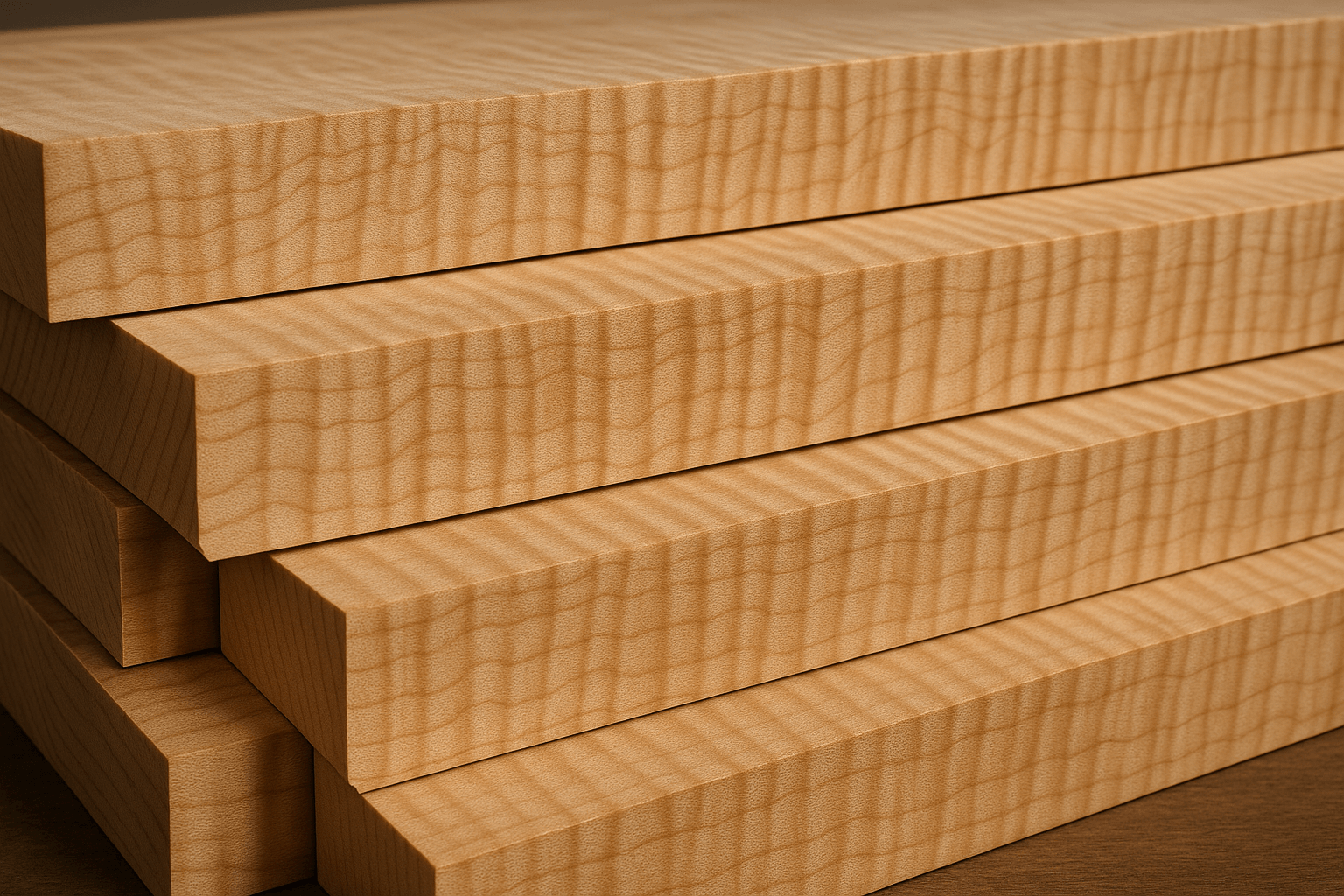
Curly Maple Quick Facts
- Wood type: Figured maple, usually from hard maple or soft maple
- Best known for: Wavy, rippled, or striped figure that reflects light
- Color: Creamy white to pale golden brown
- Common uses: Furniture, flooring, guitar parts, violin backs, cabinets, veneer, cues, turnings, and decorative woodworking
- Related names: Curly maple, tiger maple, tiger stripe maple, figured maple
- Main buying factor: Intensity and consistency of the figure
- Best for: Interior projects where appearance matters as much as performance
What Is Curly Maple?
Curly maple is not a separate maple species. Instead, it is a figured form of maple wood that shows a distinctive rippled or wavy grain pattern. This visual effect can appear in different maple species, but it is especially associated with sugar maple and other maples used in fine woodworking.
What makes curly maple special is not just the grain itself, but the way the figure reacts to light. When a board is cut and finished well, the surface can appear to shimmer or change as the viewing angle shifts. That effect is one of the main reasons curly maple is so popular with furniture makers, luthiers, and anyone working with figured hardwood lumber.
What Causes Curly Maple Figure?
One of the most common questions people ask is what causes curly maple. The short answer is that curly maple figure comes from an unusual growth pattern in the wood fibers. Instead of running in a more predictable straight direction, the fibers undulate in a wave-like pattern. That irregularity creates the distinctive curly wood grain or wavy maple look that makes the wood so decorative.
The exact cause is still discussed among woodworkers and foresters, but the figure is generally linked to irregular fiber development during growth rather than to a separate species. That is why some boards from the same general type of maple may be plain, while others develop strong curl. In practical terms, curly maple is best understood as figured maple rather than a different botanical tree.
Curly Maple Wood Properties
Curly maple wood combines the attractive look of figured lumber with the dependable performance of maple. Its exact properties vary depending on whether the board comes from hard maple or soft maple, but most buyers choose it for a balance of visual appeal, durability, and workability.
Color and Figure
Curly maple is usually light in color, ranging from creamy white to pale amber or warm golden tones. The most valuable boards show a consistent, pronounced figure across the face, often described as rippled, striped, or flame-like.
Curly Maple Hardness
If you are searching for curly maple hardness, the key thing to know is that the figure does not automatically make the wood a different hardness from its base species. Curly maple sold as curly hard maple is generally dense, durable, and suitable for furniture, flooring, and instrument parts. Curly soft maple is usually a bit easier to work with, though still strong enough for many decorative applications.
In everyday woodworking terms, curly maple is considered a hard, durable interior wood, especially when it comes from sugar maple or similar hard maple stock. That is why it remains popular for projects that need both beauty and resistance to wear.
Workability and Finishing
Curly maple works well, but the figured grain can make tear-out more likely if tools are dull or cuts are too aggressive. Sharp blades, careful feed rates, and good sanding technique are important. It also benefits from thoughtful finishing, since the right finish can dramatically enhance the three-dimensional look of the figure.
Curly Maple Tree and Identification
People often search for curly maple tree or curly maple tree identification, but this is where an important distinction matters: you usually identify the tree as a maple species first, and the curly figure becomes more obvious in the wood than in the standing tree. In other words, curly maple is mostly a figured-wood term, not a separate tree species name.
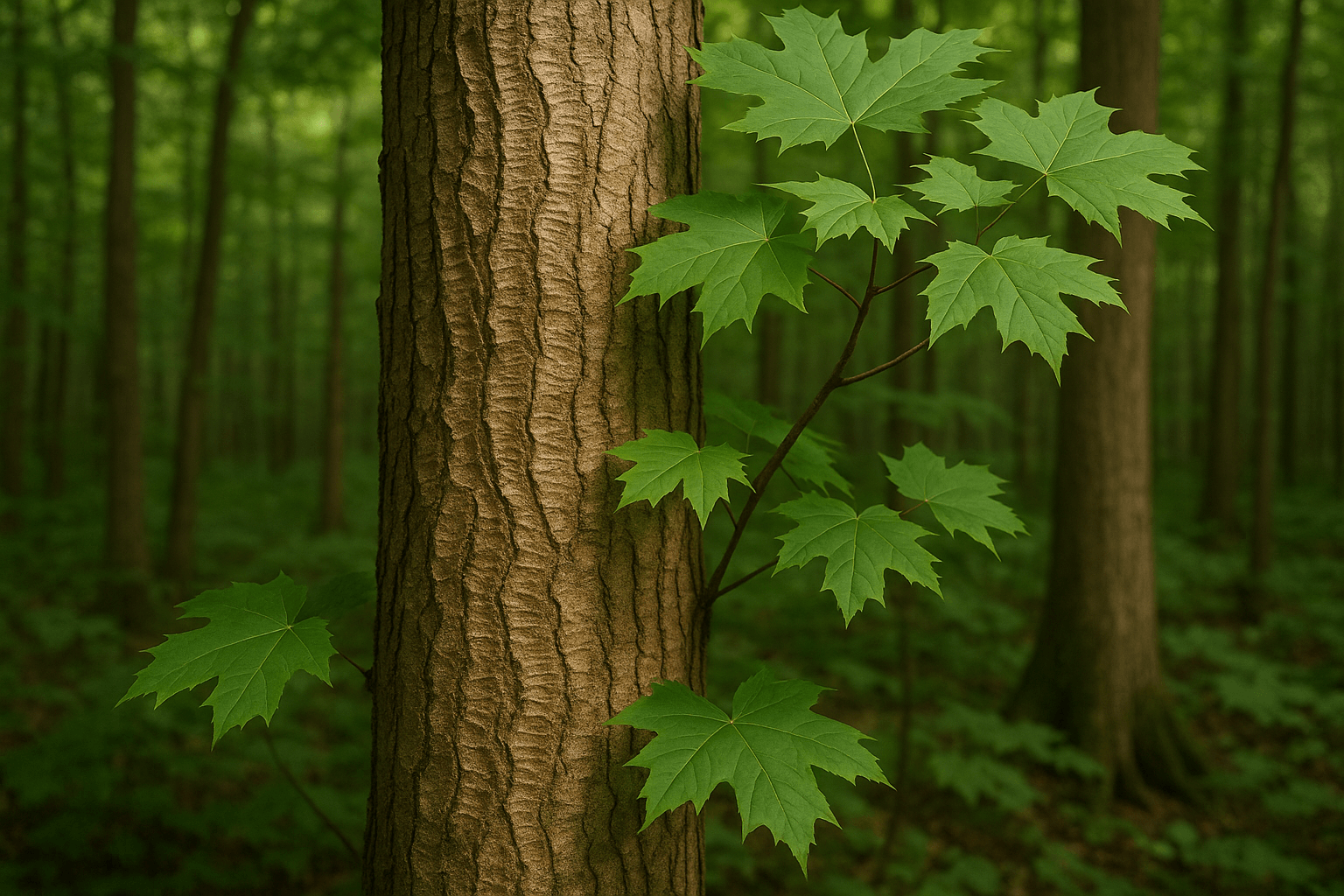
Curly Maple Tree Identification
- Leaves: Most curly maple boards come from maple trees with the classic lobed maple leaf shape, often associated with sugar maple and other common North American maples.
- Bark: Curly maple bark is not uniquely different from other maple bark. Younger maple trees tend to have smoother bark, while mature trees become rougher and more furrowed.
- Wood figure: The clearest sign of curly maple is the wood itself. Once cut, the board reveals the rippled, curled, or striped figure that gives curly maple its name.
That means a standing tree may look like a normal maple from the outside, while the lumber reveals strong figure after sawing. For many buyers, the board is easier to identify than the living tree.
What Does Curly Maple Look Like?
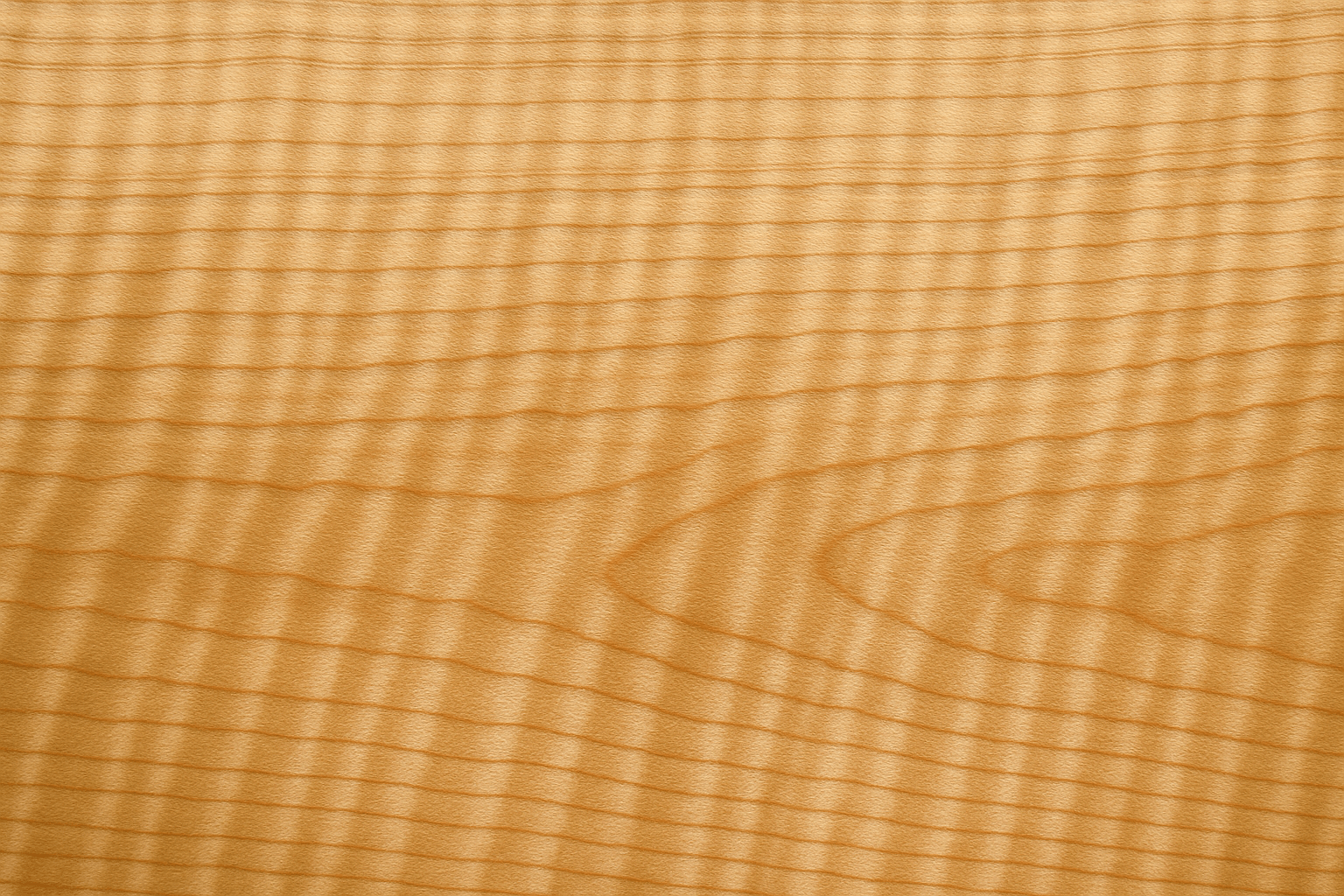
Finished curly maple often has a shimmering, almost holographic effect. The ripples catch light differently across the surface, which gives the wood movement and depth. This is why curly maple is frequently chosen for showpiece furniture, musical instruments, heirloom boxes, and decorative panels where the surface itself becomes a design element.
Depending on the cut and finish, curly maple can look subtle and elegant or highly dramatic. Boards with stronger figure are usually more valuable, especially when the curl is consistent from edge to edge.
Curly Maple vs Tiger Maple
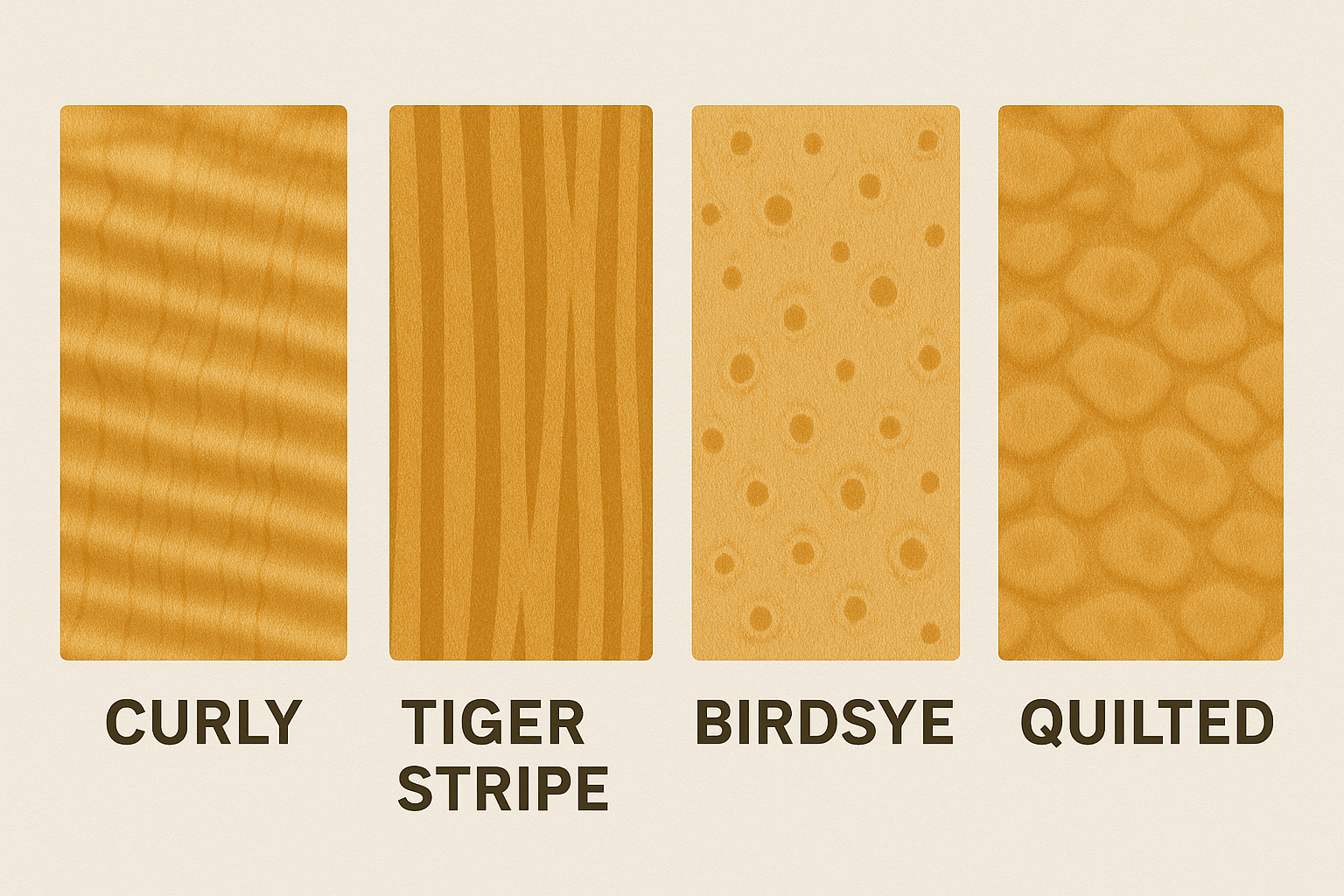
Curly maple vs tiger maple is one of the most common comparisons around this wood, and the answer is that the two names are often used very closely, sometimes even interchangeably. In many woodworking contexts, tiger maple refers to curly maple with especially bold, stripe-like figure, while curly maple can be used more broadly for any maple showing a rippled figure.
So when someone asks tiger maple vs curly maple, the practical difference is usually not species but appearance. Tiger maple tends to emphasize stronger, more parallel striping, while curly maple can look more fluid and wave-like. Both are prized figured maples used in furniture, cabinetry, and lutherie.
Quilted Maple vs Curly Maple
Quilted maple vs curly maple is another important comparison because both are decorative figured woods, but they do not look the same. Curly maple usually shows a linear ripple or stripe effect, while quilted maple has a broader, puffed, almost cloud-like figure that looks more rounded and three-dimensional.
In simple terms, curly maple looks like waves or stripes, while quilted maple looks more like soft, rolling cushions in the wood. For guitar tops, panels, and highly decorative work, the choice often comes down to whether you want a more organized figure or a more dramatic quilted look.
Birdseye Maple vs Curly Maple
Birdseye maple vs curly maple comes down to figure type. Birdseye maple is recognized by its many small, eye-like dots scattered across the surface, while curly maple features flowing waves or stripes. Both are beautiful, but they create very different visual effects.
Curly maple is often preferred for pieces that benefit from movement across long surfaces, such as table tops, cabinet doors, guitar necks, and flooring accents. Birdseye maple is often chosen for fine furniture details, instrument parts, and smaller pieces where its dense spotting can be appreciated up close.
What Is Curly Maple Used For?
Curly maple wood is used when appearance matters just as much as performance. Its figured surface makes it a favorite for both fine woodworking and specialty lumber markets.
Furniture and Cabinetry
Curly maple furniture is especially valued for dining tables, dressers, cabinets, sideboards, desks, and accent panels. The figure turns ordinary surfaces into focal points, which is why curly maple is often chosen for heirloom-style furniture and statement pieces.
Flooring
Curly maple flooring is less common than standard maple flooring, but it is highly attractive in interiors where the goal is a brighter, more decorative look. Because figured boards are often more expensive, curly maple is sometimes used as an accent rather than across an entire floor.
Musical Instruments and Luthier Work
Curly maple is especially popular with luthiers. It is widely used for violin backs, guitar components, mandolins, and other instruments where both sound and appearance matter. The figure adds visual value, while maple’s hardness and stability make it a strong choice for precision work.
Decorative Woodworking and Specialty Lumber
Because the first-page results for curly maple often include specialty lumber sellers, it is worth saying clearly: curly maple is a classic figured hardwood lumber choice for one-of-a-kind boards, turning blanks, cue stock, decorative panels, veneer, and hobby woodworking. Buyers are often not just looking for maple, but for a specific level of figure.
Working With and Finishing Curly Maple
Curly maple rewards careful technique. The figure can tear out during planing or aggressive machining, so sharp tools, light passes, and clean sanding make a big difference. When it comes to finishing, many woodworkers aim to highlight the figure rather than hide it.
Clear finishes are popular because they preserve the natural light color and show off the curl. Some makers also use dyes or carefully controlled stains to add contrast, but figured maple can blotch if the finish schedule is rushed. Test pieces are worth the effort.
Curly Maple Lumber and Pricing
The price of curly maple lumber depends more on figure than on the name alone. Boards with strong, consistent curl usually cost more than boards with faint or uneven figure. Width, thickness, cut quality, moisture content, and whether the lumber is hard maple or soft maple also affect price.
In general, curly hard maple tends to be more expensive than curly soft maple when buyers want maximum durability. Premium instrument-grade or highly figured boards can command especially high prices because each board is unique and visually evaluated, not just sold as commodity lumber.
How to Buy Curly Maple Boards
If you are shopping for curly maple boards, do not judge them only by species. Figure intensity matters just as much. Here are the most important things to check:
- Figure consistency: Strong, even curl usually has more value than scattered figure.
- Intended use: Instrument makers, furniture builders, and flooring buyers may want different cuts and figure patterns.
- Base species: Ask whether the board is hard maple or soft maple if hardness matters for the project.
- Drying and stability: Properly dried curly maple is less likely to create problems later in the build.
- Surface quality: Good milling and fewer defects make figured boards easier to use and finish well.
For outdoor projects, curly maple is usually not the best option. If you need a more weather-resistant wood, see Teak or Ipe Wood. For softer carving projects, Basswood may be easier to work. For darker decorative alternatives, Wenge Wood, Cocobolo, Sapele, or Olive Wood can offer a very different design direction.
FAQ About Curly Maple
What is curly maple?
Curly maple is figured maple wood that shows a rippled, wavy, or striped grain pattern. It is valued more for its figure than for being a separate maple species.
What causes curly maple?
Curly maple figure is caused by irregular fiber growth in the wood, which creates the wave-like grain pattern that reflects light so dramatically.
Is tiger maple the same as curly maple?
Often, yes. The names are closely related, though tiger maple is commonly used when the figure looks especially bold and stripe-like.
How hard is curly maple?
Curly maple is generally considered hard and durable, especially when the figured board comes from hard maple. Exact hardness depends on the base maple species.
How do you identify a curly maple tree?
You identify the tree as a maple first by its leaves and bark, but the curly figure is usually easier to confirm in the milled wood than in the standing tree.
Is curly maple good for flooring?
Yes, curly maple can be excellent for decorative interior flooring, especially when buyers want a brighter and more figured look than standard maple provides.
Final Thoughts
Curly maple remains one of the most desirable figured woods because it combines elegance, versatility, and reliable performance. It is not just maple with a nice look; it is a specialty material sought after for furniture, flooring, instruments, and fine interior woodworking. Whether you are comparing curly maple vs tiger maple, researching what causes curly maple, or shopping for high-quality figured boards, the most important thing to remember is that the value of curly maple lies in the marriage of species performance and standout figure.
Explore More About Wood: