Wenge Wood: Meaning, Color, Properties, Uses & Price
Wenge wood is a dense Central African hardwood known for its medium-to-dark brown heartwood, nearly black streaks, very coarse texture, and high wear resistance. Genuine wenge comes from Millettia laurentii, a tropical hardwood with a Janka hardness of about 1,930 lbf. In the United States it is mainly used for specialty furniture, veneer, flooring, paneling, turning, musical instruments, and high-end interior details.
Its appearance is distinctive, but wenge also has important trade-offs: it is expensive, hard on cutting tools, prone to sharp splinters, and the species is classified as endangered. This guide explains what wenge wood is, what the name means, its color and mechanical properties, how it behaves during machining and finishing, its best uses, current U.S. lumber pricing, and what buyers should consider before choosing it.
What Is Wenge Wood?
Wenge is the commercial name for the wood of Millettia laurentii, a hardwood species in the Fabaceae family native to west-central tropical Africa. Its native range includes Cameroon, Congo, the Democratic Republic of the Congo, Equatorial Guinea, Gabon, and the Gulf of Guinea islands. The wenge tree commonly reaches about 60 to 90 feet in height with trunks roughly 3 to 4 feet in diameter.
The wenge meaning in woodworking is straightforward: it refers to this African hardwood and the lumber or veneer produced from it. A useful wenge definition also needs to distinguish the actual species from products that only imitate its appearance. In furniture catalogs, cabinetry, laminates, and finishes, “wenge” is sometimes used as a color name for a very dark brown or near-black look even when no genuine Millettia laurentii is present.
In the U.S., wenge is a specialty imported hardwood rather than a commodity species. It is sold through exotic-lumber suppliers as rough or surfaced boards, turning stock, smaller project pieces, and veneer. Because of its cost, weight, and conservation concerns, it is often used selectively—as a focal material, accent wood, veneer, or high-value component—rather than throughout an entire project.
Wenge Wood Quick Specs
| Property | Typical value or description |
|---|---|
| Scientific name | Millettia laurentii |
| Wood type | Tropical hardwood |
| Native range | West-central tropical Africa |
| Average dried weight | About 54.2 lb/ft³ (870 kg/m³) |
| Janka hardness | 1,930 lbf (about 8,600 N) |
| Grain and texture | Generally straight grain; very coarse, open texture |
| Natural decay resistance | Very durable; good termite resistance |
| Shrinkage | Radial 4.8%; tangential 8.3%; volumetric 13.3%; T/R ratio 1.7 |
| Conservation status | Endangered on the IUCN Red List; not listed in the CITES Appendices |
Wenge Wood Color, Grain and Texture
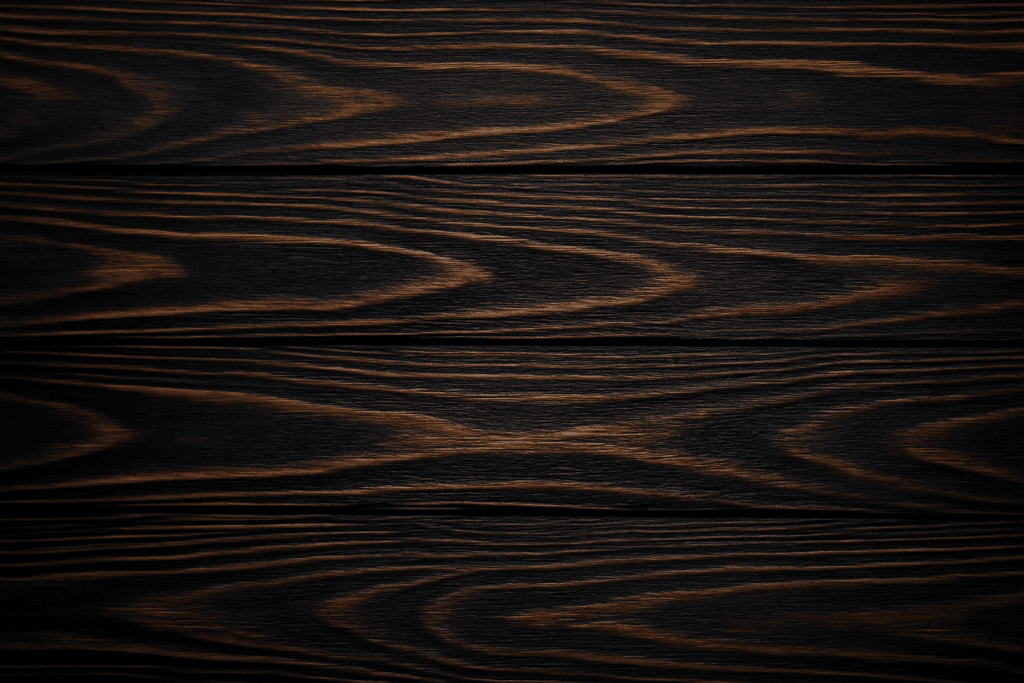
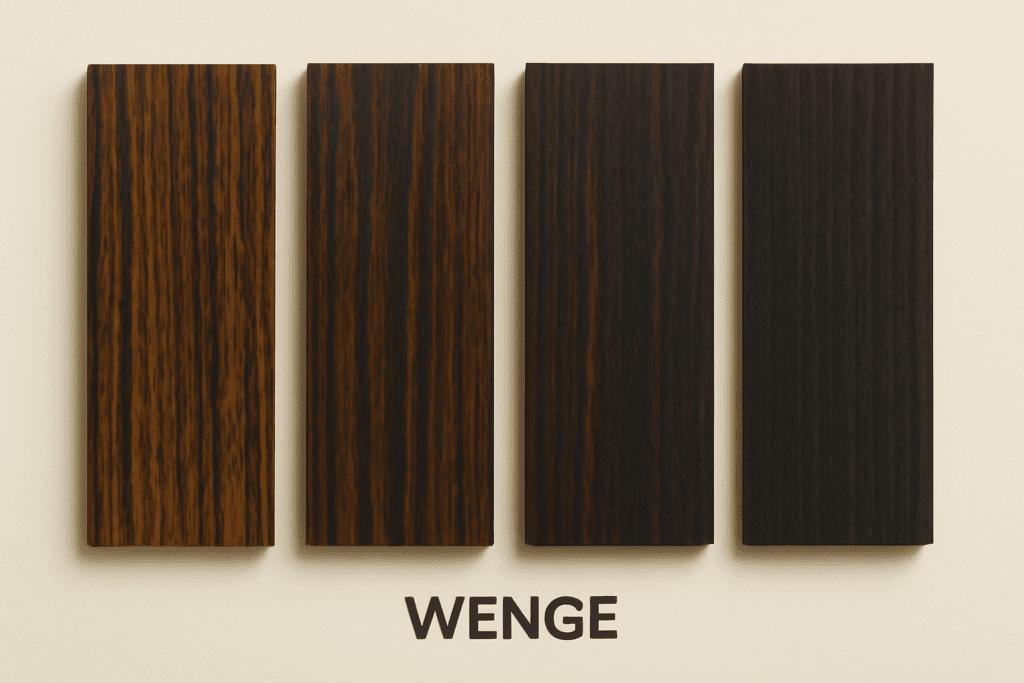
Wenge wood color is usually medium to dark brown with narrow, nearly black streaks. Some boards show reddish or yellowish undertones before finishing. The contrast between the brown background and darker bands gives the wood its characteristic striped appearance and makes individual boards visually distinctive.
The dark wenge color becomes more pronounced after many clear or oil-based finishes are applied. A finished board can look close to black, especially from a distance, while the lighter and darker bands remain visible at closer range. Unlike many dark hardwoods that deepen with age, wenge heartwood can actually become lighter with prolonged exposure to sunlight.
The grain is generally straight and the texture is very coarse, with large open pores and low natural luster. Those pores are not only a visual feature; they affect finishing. Sanding alone will not necessarily create a perfectly level, glass-smooth surface, so pore filling may be appropriate when the project calls for a flatter, more polished finish.
Wenge Wood Properties: Hardness, Density and Durability
The most useful wenge wood properties for buyers and woodworkers are its high hardness, heavy weight, stiffness, coarse texture, and natural resistance to decay. These characteristics explain why it performs well in wear-prone applications, but they also explain why it is more demanding to machine than many common domestic hardwoods in the U.S.
Wenge Janka Hardness and Wear Resistance
Wenge Janka hardness is approximately 1,930 lbf. That places it above common U.S. species such as black walnut and red oak in resistance to indentation. This makes wenge suitable for flooring, furniture components, stair parts, and other applications where dent resistance matters.
High Janka hardness does not mean the wood is easy to use. The same density that helps it resist dents also increases cutting resistance and tool wear. For furniture and millwork, the best results come from dry stock, sharp tooling, controlled cuts, and designs that do not leave fragile, splinter-prone edges exposed.
Density and Dimensional Movement
Wenge averages about 54.2 lb/ft³ at 12% moisture content, making it noticeably heavier than many domestic furniture woods. Large solid panels, thick table parts, or heavy cabinet components can therefore add substantial weight to a finished project.
Reported shrinkage is about 4.8% radial, 8.3% tangential, and 13.3% volumetric, with a T/R ratio around 1.7. Those figures are useful for understanding movement as moisture changes. Properly dried material can perform well indoors, but stock should still be acclimated to the shop or installation environment before final milling, joinery, or flooring installation.
Natural Decay and Termite Resistance
Wenge is rated very durable in terms of natural decay resistance and also has good termite resistance. That is an important distinction because its reputation as an interior design wood can give the impression that it lacks natural durability. The wood itself is durable; whether it is the best material for a specific exterior project is a separate question involving cost, supply, splintering, and responsible sourcing.
Working With Wenge Wood: Cutting, Sanding and Safety
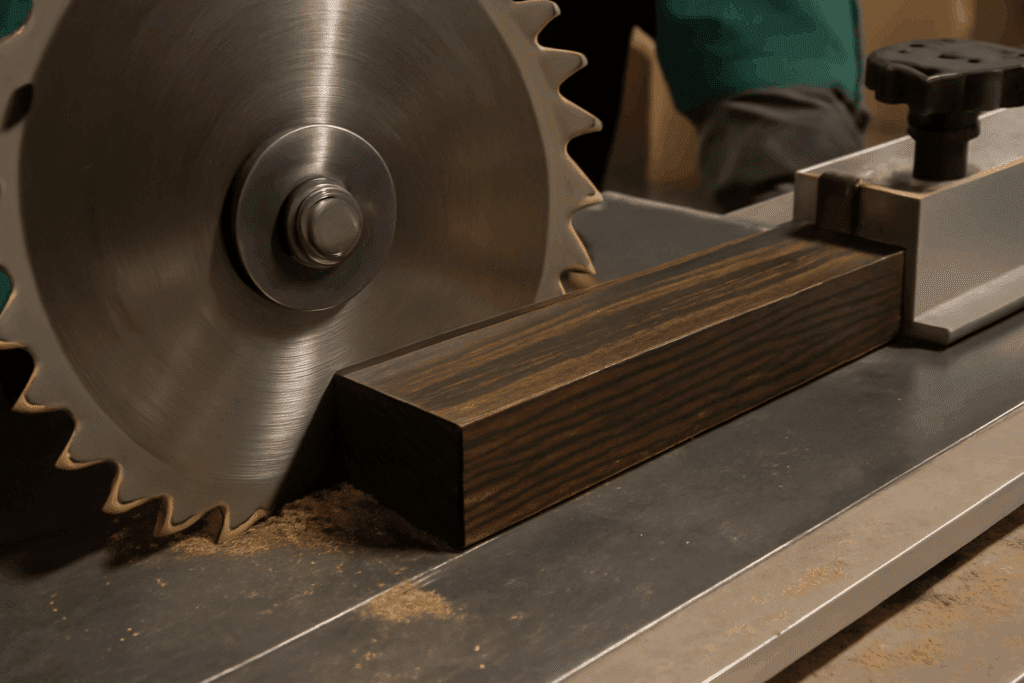
Wenge can be difficult to work with both hand and machine tools. It blunts cutting edges, can splinter aggressively, and may sand unevenly because the lighter and darker areas differ in density. Sharp carbide tooling, light passes, backing support for crosscuts, and careful edge treatment help reduce tear-out and broken fibers.
Its large pores also affect surface preparation. If the goal is a smooth closed-pore finish, plan the finishing process before the final sanding rather than assuming progressively finer sandpaper will eliminate the texture. Test cuts and finish samples on offcuts are especially useful because the raw wood changes considerably once a clear or oil-based finish is applied.
Safety deserves particular attention. Wenge dust has been reported to cause skin and eye irritation and can act as a sensitizer in some people. The wood is also known for long, sharp splinters that can be painful and difficult to remove. Effective dust extraction, eye protection, appropriate respiratory protection, and gloves during rough handling are sensible precautions when cutting, routing, or sanding it.
Wenge Finish Meaning: Real Wood vs. Wenge-Look Finishes
The term wenge finish can refer to two different things. On genuine wenge, it describes the coating system applied to the actual wood. In furniture catalogs, cabinets, laminates, flooring products, and manufactured panels, however, “wenge finish” can simply describe a dark brown-to-black color and grain effect intended to resemble the species.
If you are asking what is wenge finish on real wood, the appearance depends on the product used and the level of pore filling. Clear oils and oil-modified finishes tend to deepen the brown and black contrast and can make the surface appear almost black. Film finishes can also work well, but the very large pores may remain visibly textured unless they are filled first.
A product labeled wenge wood stain usually uses “wenge” as a color reference; it is not necessarily a stain formulated specifically for genuine Millettia laurentii. For buyers, the practical rule is to check the material specification. A cabinet, table, or panel sold with a “wenge finish” may be solid wenge, wenge veneer, another wood stained dark, laminate, or another manufactured surface.
What Is Wenge Wood Used For?
Wenge is best suited to projects where its dark appearance, hardness, and strong grain justify the cost. In the United States, it is more often used selectively than as an all-purpose hardwood, particularly when a designer or woodworker wants a dark natural material with strong visual contrast.
Wenge Furniture, Cabinets, Veneer, Millwork and Specialty Uses
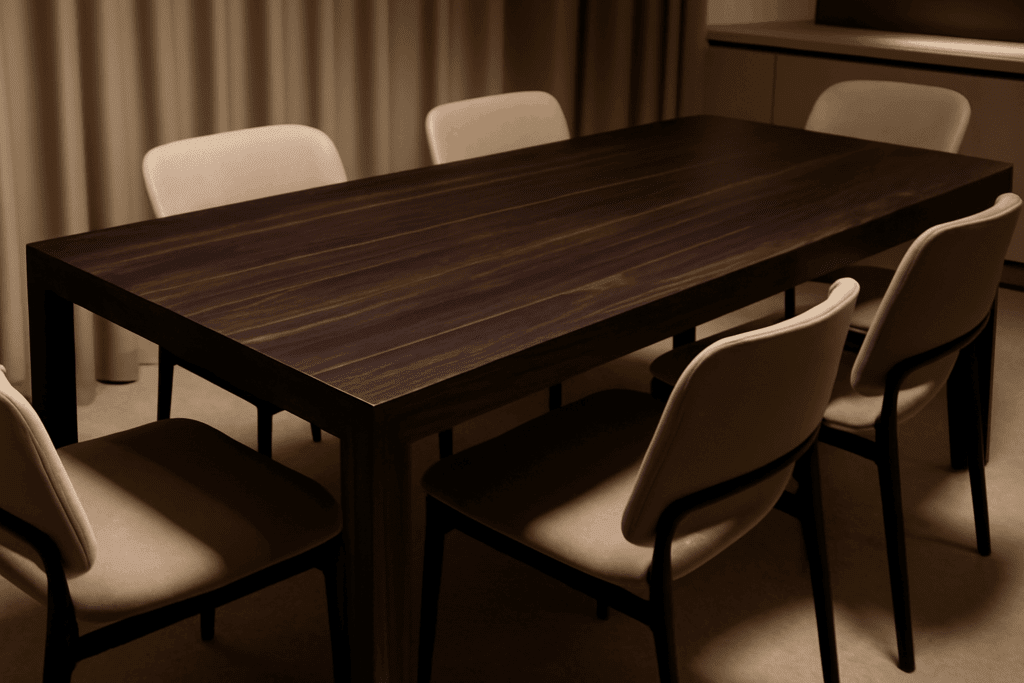
Wenge wood furniture includes dining tables, desks, cabinets, shelving, chairs, benches, and custom casework. Because solid stock is expensive and heavy, wenge wood veneer is especially useful for large cabinet doors, wall panels, and furniture surfaces where the appearance matters more than full-thickness mass.
Wenge is also effective as an accent beside lighter woods. A narrow strip, frame, drawer front, tabletop detail, or contrasting component can provide the color impact without requiring a large quantity of solid stock. For cabinetry or furniture where a warmer color and easier machining are more important than wenge's near-black look, Sapele wood is a natural species to compare.
Other specialty uses include turned objects, sculpture, decorative paneling, and musical instruments. Instrument makers use wenge for selected guitar and bass components where its stiffness, hardness, weight, and appearance fit the design. Turners value the strong contrast between its dark bands and lighter companion woods, although its splintering tendency still requires careful tool control.
Wenge countertops and other solid work surfaces are possible when properly constructed and finished, but they remain a niche choice in the U.S. Cost, weight, coarse pores, and splinter-prone unfinished edges make wenge less practical than many more common countertop woods for large installations.
Wenge Hardwood Flooring
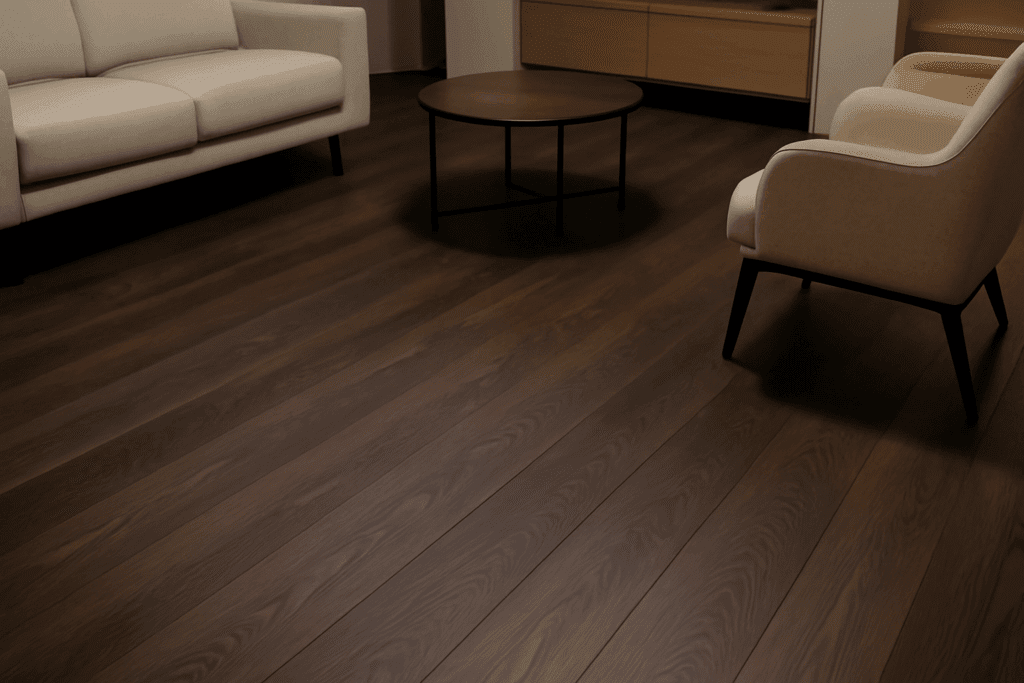
Wenge wood flooring combines high dent resistance with an unusually dark natural appearance. Its 1,930-lbf Janka hardness supports flooring use, while its coarse grain and nearly black striping create a floor that looks very different from oak, maple, or walnut.
Wenge hardwood flooring is therefore most appropriate when the design calls for a premium dark floor and the budget can support an imported exotic species. It is not a mainstream U.S. flooring choice because cost and availability are much less favorable than common domestic hardwoods.
Factory-finished boards or carefully finished site-installed flooring can help control the coarse surface and protect edges from damage. As with other solid hardwood flooring, the boards should be acclimated and installed with seasonal movement in mind. Because wenge can lighten with prolonged sunlight exposure, rugs and furnishings may also create visible color differences over time if some areas receive substantially more light than others.
Is Wenge Suitable for Outdoor Use?
Wenge has very good natural decay resistance and good termite resistance, so the wood itself is capable of handling biological exposure better than many interior hardwoods. That does not automatically make it the most sensible choice for decks, patios, or large exterior installations.
Its high cost, splintering tendency, limited supply, and endangered conservation status make extensive outdoor use difficult to justify when established alternatives are available. For outdoor furniture, Teak wood is usually the more practical species to evaluate. For exterior decking and severe weather exposure, Ipe wood is a more established option.
Wenge Lumber Price and Availability in the U.S.
Wenge lumber is an expensive imported hardwood in the U.S. market. It is commonly sold by the board foot, a volume unit equal to 144 cubic inches. Listings may include rough 4/4 and 8/4 stock as well as surfaced lumber. In hardwood terminology, 4/4 means the board began at roughly one inch thick in the rough, while S2S means it has been surfaced on two faces and is therefore thinner than its original rough dimension.
As a market snapshot checked in August 2026, Bell Forest Products listed rough 4/4 wenge at $19 per board foot for quantities under 10 board feet, with lower per-board-foot pricing for larger orders. Woodworkers Source listed 4/4 S2S wenge at $26.99 per board foot. The two prices should not be treated as a direct apples-to-apples comparison because rough and surfaced lumber involve different preparation, dimensions, grading, and retail services.
| U.S. market example | Listed price | What it tells the buyer |
|---|---|---|
| Bell Forest Products — 4/4 rough wenge, under 10 BF | $19.00/BF | Rough stock still requires milling; quantity discounts lower the BF price. |
| Woodworkers Source — 4/4 S2S wenge | $26.99/BF | Surfaced on two sides; retail preparation and selection add cost. |
Before comparing suppliers, check thickness, width and length ranges, grade, moisture condition, whether the stock is rough or surfaced, shipping charges, and minimum order requirements. For wide panels, cabinet doors, or large casework, veneer may provide the appearance of wenge with less solid lumber, lower material weight, and potentially lower total project cost.
Wenge Sustainability and Responsible Sourcing
Millettia laurentii is listed as Endangered on the IUCN Red List and is not currently listed in the CITES Appendices. Those two facts should not be confused: the absence of a CITES listing does not mean the species has no conservation concerns. Wenge has faced pressure from exploitation and reduction of its natural range.
For U.S. projects, buyers should ask the supplier to identify the species, country of origin, and any available documentation supporting legal and responsible harvest. Certified or otherwise traceable material is preferable when available, particularly for larger purchases.
Responsible use can also influence project design. Veneer, narrow accent pieces, or limited solid components can deliver the visual character of wenge while using much less material than a large solid-wood installation.
Frequently Asked Questions About Wenge
How Do You Pronounce Wenge?
Wenge pronunciation is commonly given as “WHEN-gii” or “WHEN-ghay.” Pronunciation varies somewhat by region and trade usage, but both forms are widely recognized in English-language woodworking.
What Is White Wenge?
“White wenge” usually refers to lati, a different African wood sold under the scientific names Amphimas pterocarpoides and Amphimas ferrugineus. It is not a pale variety of genuine wenge. Lati earned the nickname because its wide grain bands can resemble wenge, but its heartwood is light yellowish brown to golden rather than dark brown and black.
Is Wenge the Same as Ebony?
No. Wenge and ebony are botanically different woods. Genuine wenge is Millettia laurentii, while true ebonies belong to the genus Diospyros. Wenge can become nearly black after finishing and is sometimes chosen when a project needs an ebony-like visual effect, but its coarse texture, striped grain, mechanical properties, and availability are different.
Explore More About Wood: